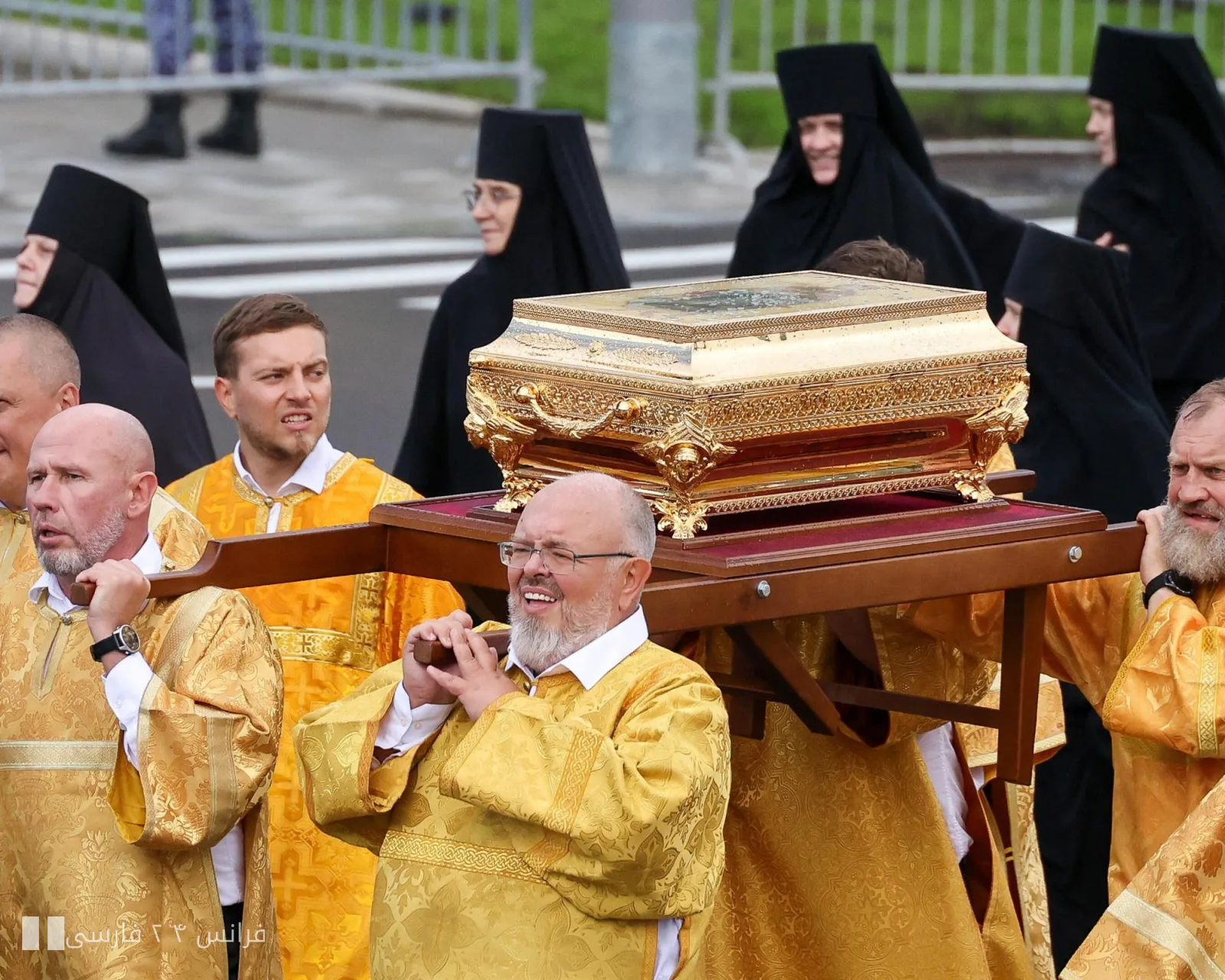
In a controversial and symbolic move, the Russian Orthodox Church has sent part of the right hand of "Dmitry Donskoy," a prince from the 14th century, to Russian soldiers at the frontlines of the war in Ukraine. This action has been presented not only as a religious act but also as a means to boost the morale of soldiers in the battlefield.
The Symbolic Power of Historical Remains
Dmitry Donskoy is recognized as a national hero of Russia who defeated the Mongol army in 1380. The Orthodox Church has stated that sending these remains will help "boost the morale" of the soldiers and assist them in their path to victory. This action clearly demonstrates the use of historical and religious symbols to provoke nationalist sentiments during wartime.
The remains, placed in a "reliquary," have been transferred to Russian-occupied areas in eastern Ukraine and are gradually being distributed at the frontlines of the war. This move is not only an attempt to boost the morale of the soldiers but is also seen as a message to enemies and the international community, indicating Russia's firm resolve to continue the war.
Cultural and Political Implications
The sending of historical remains to the battlefield, especially as the war in Ukraine has become one of the most significant political and military crises in the contemporary world, could have profound implications. This action may help strengthen nationalist sentiments in Russia and also increase global criticism regarding the use of religious and historical symbols in wars.
Given the current circumstances, this action by the Orthodox Church could be seen as part of a larger strategy to justify the continuation of the war and increase public support for the government. In today's world, the combination of religion and politics is clearly influential in the landscape of contemporary wars, and this is another prominent example of that.