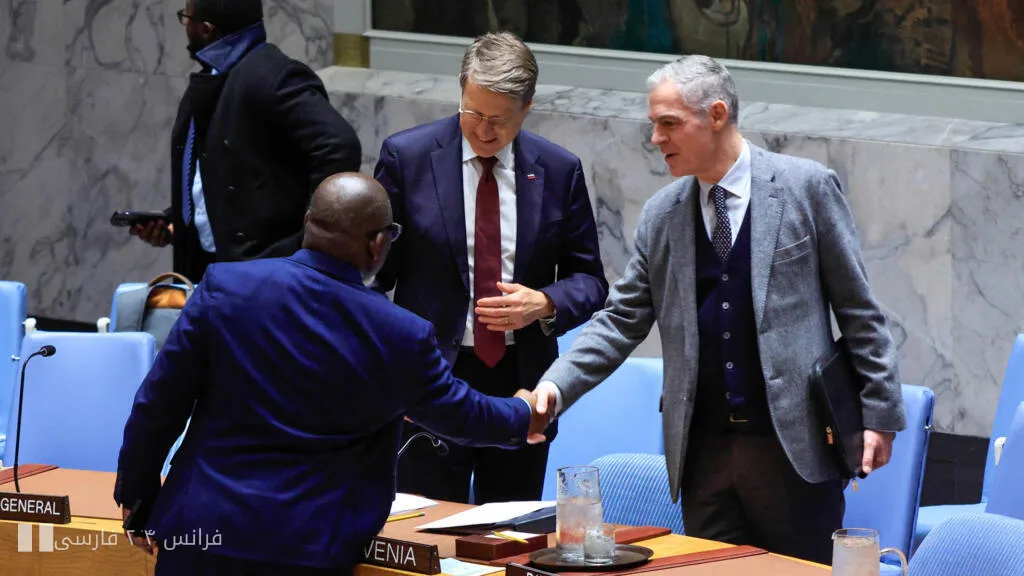
The foreign ministers of the member countries of the Gulf Cooperation Council have coordinated next week's meeting in Muscat to consult with Abbas Araghchi about supporting the 'temporary arrangement' for managing commercial traffic in the Strait of Hormuz and have established the level of dialogue at the ministerial level. Based on recent media reports and official announcements from Oman, the focus of the consultations is the implementation of the temporary shipping route and safety mechanisms and operational coordination in Hormuz. This temporary route has been formulated in direct talks between Oman and Iran and is set to be completed with the participation of the Gulf Arab capitals at both political and technical levels.
The teaser for the meeting has emerged from a series of diplomatic movements: on August 25, 2026, the Tehran–Muscat joint statement emphasized the 'necessity of resuming safe navigation in Hormuz' and 'the imminent announcement of a temporary corridor and operational arrangements to restore safety.' Abbas Araghchi's name was included in this statement as 'Iran's Foreign Minister,' and the Omani Foreign Ministry has recorded several contacts and meetings with him in June and July.
Regionally, the foreign ministries of the Cooperation Council member states have been pursuing regular consultations about Hormuz since late July in the form of advisory meetings of ministers and secretariat coordination. The public minutes of these consultations—published from Doha to Manama—have consistently placed the topics of 'freedom and safety of navigation in Hormuz,' 'rights of passage and transit,' and 'returning conditions to the pre-war state' on the agenda. The timing and agenda of the upcoming meeting in Muscat have been set in this context.
Framework of the Temporary Route and Oman's Position
The Oman–Iran process has been accompanied by several clear indicators since mid-summer: on July 11, 2026, in Muscat, the talks between the foreign ministers of the two countries focused on 'safety and freedom of navigation in Hormuz'; then on August 25 in Tehran, the two sides formulated the 'definition of a temporary corridor' and 'mine-clearing project' within a phased framework. In this context, Muscat has clarified that any transit arrangements must proceed in accordance with international law and without transit fees.
The operational provisions published in the media and news releases describe the pattern of separated routes: inbound passage (toward the Gulf) primarily in Iranian waters and outbound (toward the Sea of Oman) near the shores of Oman and then in Iranian waters; joint technical committees to exchange navigational information and safety warnings; and field implementation to be verified within a limited timeframe (60 days).
At the political level, the August 25 Oman–Iran statement registered 'holding joint discussions with coastal countries in the Gulf' as the next step; an action that directly feeds the agenda of the Cooperation Council ministers' meeting in Muscat and keeps the dialogue channel with the Iranian side open at the ministerial level.
Field Picture of Hormuz: Decline in Traffic and Surge in Energy Prices
The field context of this initiative is clear. Ship tracking data shows that the average passage of 'cargo ships' through Hormuz fell to about 10 vessels per day in the decade leading up to September 7, 2026; the lowest level since May. During this period, no very large crude carrier (VLCC) exited the strait for several consecutive days. Specialized reports from Singapore, Port News, and news releases have recorded this image in alignment.
The escalation of conflicts between Iran and the United States from September 8 to 11 halted passage through Hormuz at many points and pushed Brent prices above $100. Daily assessments by the Associated Press have reported rising oil prices, new records in the diesel market, and corresponding inflationary pressures, citing 'persistent disruption in Hormuz.'
Alongside this disruption, data collected by Kpler analysts indicates that despite the drop in Iranian exports under maritime blockade, the flow of non-Iranian oil through alternative routes has strengthened. This redistribution highlights the fragility dependent on heavy military presence in secure routes.
Parallel Threat in Bab el-Mandeb
The risk to maritime chains has not been limited to Hormuz. On September 10, 2026, Houthi forces close to Iran took control of the port of Al-Mokha on the Red Sea coast; a development that intensifies the threat of blockage or insecurity in Bab el-Mandeb and, alongside the disruption in Hormuz, puts parallel energy and trade routes under additional pressure.
With a portion of Gulf countries' oil exports diverted to the Red Sea and the Suez Canal in recent months, the continuation of insecurity in Bab el-Mandeb reduces the capacity to absorb cargo from Hormuz and increases market sensitivity to any signs of de-escalation in the eastern strait. News assessments from Cairo to New York have recorded this risk correlation.
Political Weight of the Muscat Meeting
Registering the 'level of foreign ministers' for the Hormuz talks is a direct political signal to the involved parties and insurance and shipping actors. The network of summer consultations of the Cooperation Council, from advisory meetings of ministers to preparing the agenda for the 168th Council of Ministers meeting in September, provides a framework in which the Oman–Iran understanding can be accompanied by coordinated regional political support.
At the same time, external parallel routes are also active. On July 24, media reports indicated preparations for a high-level meeting between the United States and the United Kingdom regarding a coalition to protect shipping in Hormuz; a move that, depending on its content, either operates parallel to the Muscat initiative or, if aligned, enhances it.
Legal and Technical Position of the Mechanism
In recent statements and official positions, Oman has emphasized specific legal principles: freedom of navigation in accordance with international law, avoidance of any transit fees or licensing, and prioritization of safety and mine clearance. These principles clarify the legal boundaries of the temporary mechanism while recognizing the sovereign rights of coastal countries.
On the Iranian side, officials from the Foreign Ministry and the Legal-International Department have outlined the main lines of the temporary route: separation of entry and exit routes, operational cooperation with Oman, and pursuit of long-term arrangements after a limited period. They have simultaneously emphasized that the full opening of the route is contingent upon fulfilling commitments under previous agreements with the United States.
Identification of the Iranian Side Official
In Oman's official correspondence and statements, the title 'Iran's Foreign Minister' for Abbas Araghchi has been explicitly recorded; including in the announcement on July 11 regarding the Muscat talks and in the joint statement on August 25 in Tehran. Thus, the level of dialogue counterparts on the Hormuz route has been established at the ministerial level.
Market Impact and Risk Metrics
The energy and maritime transport market reacts immediately to any sign of reduced risk in Hormuz. Oil spikes above $100 on September 9 and 10, and fluctuations around $104 on September 11 were recorded alongside conflicting news from the field and diplomacy. Commodity analysts in European banks have described the level of oil flow from Hormuz as 'significantly below pre-war levels.'
For shipowners, any official mechanism—even temporary—that increases the predictability of traffic reduces insurance and operational costs. Data from Kpler and reports from the UK maritime security indicate an increase in 'projectile hit incidents' and a noticeable decrease in passage in recent weeks; an image that highlights the urgency of the frameworks announced by Muscat.
Diplomatic Overlaps
The Oman process overlaps with initiatives from other capitals. Doha has kept a high-level communication channel with Tehran active, and the Prime Minister and Foreign Minister of Qatar consulted with the President of Iran and Abbas Araghchi about the Hormuz route in late August. Simultaneously, media references to intensive contacts between special representatives from Washington, the Iranian Foreign Minister, and his Omani counterpart have highlighted the weight of trilateral coordination in drafting the 60-day plan.
Scope of the Agenda in Muscat
The agenda for next week's meeting in Muscat has emerged from this framework: establishing the title 'temporary arrangement' for commercial shipping from Hormuz; determining operational routes and coordination hubs with Oman; announcing the timeline for implementation and field verification indicators; and channeling for the inclusion of other coastal capitals into the system of information exchange and maritime warnings.
At the level of information dissemination, by the evening of Friday, September 11, 2026 (local time), the Omani Foreign Ministry and the Gulf Cooperation Council Secretariat had not published new details about the timing and agenda of the meeting; instead, the official pages of these two entities have continuously published news about condemning recent attacks, preparing for the September ministerial meetings, and supporting freedom of navigation.
Critical Point: Linking Field and Table
For sustainable impact, the implementation of the temporary route must coincide with a tangible decrease in 'incidents of harm to vessels' and an increase in the number of daily passages. The measurability of this process in tracking data and reports from commercial observers is possible, and the energy market reacts quickly to it. Conversely, the continuation of attacks in Hormuz or the transfer of risk to Bab el-Mandeb could keep prices high and diminish any diplomatic gains.
The Muscat meeting, if it concludes and announces an operational framework, sends a clear signal to shipping and insurers: a planned return to a critical corridor. The recorded series of consultations in the summer of 2026 indicates that the necessary institutional capacity to maintain this signal at the regional level has been established. However, the gap between this framework and field improvement will be filled by stopping attacks and precise technical work—from navigational roadmaps to mine clearance.