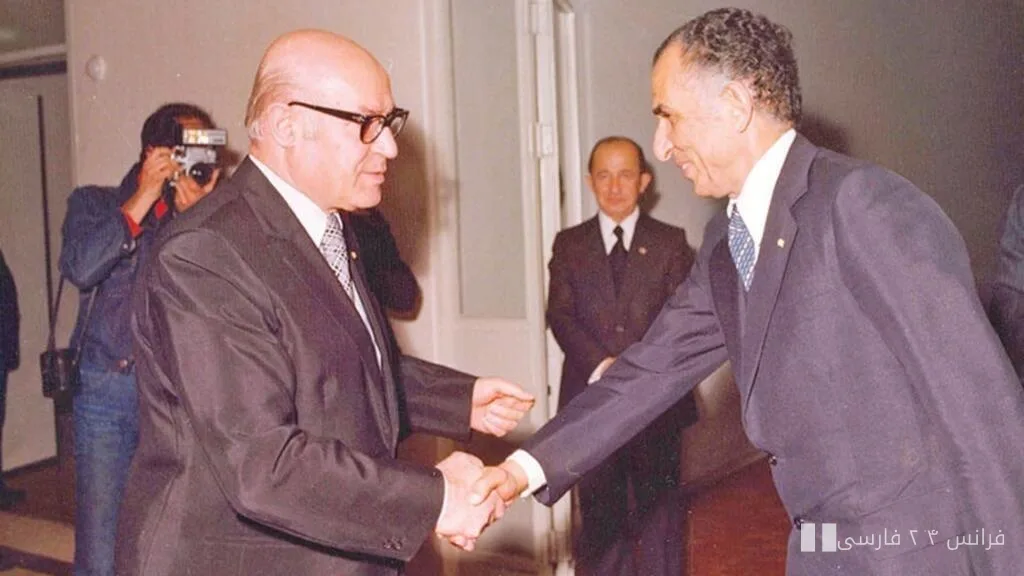
In August ۱۹۷۷, Jamshid Amouzgar was appointed as the Prime Minister of Iran, while the country was on the brink of profound changes and social transformations. He had taken the position of Prime Minister instead of Amir Abbas Hoveyda, a politician who had long been at the helm of the government. But did this change really mean transformation?
From Trust to Disappointment
Amouzgar, finding himself in the midst of the country's political and economic crises, soon realized that he could not meet the expectations of society. Economic problems, public dissatisfaction, and political pressures increased to such an extent that he was no longer able to continue his work. In the summer of '۵۷, Amouzgar decided to resign and handed over the government to Jafar Sharif-Emami, the President of the Senate.
It Was Too Late; Did It Really Change?
This change at the top of power could not improve the situation. People took to the streets, and their voices of protest grew louder than ever. Amouzgar's resignation was not only seen as a political failure but also served as a kind of accelerator for the Islamic Revolution. Despite his efforts and promises, he could not gain the trust of the people and consequently faced dire consequences.
The new government also faced similar challenges, and from that point on, the course of political transformations in Iran changed significantly. Could Amouzgar and his government have stopped this trend, or were they merely part of a larger game?