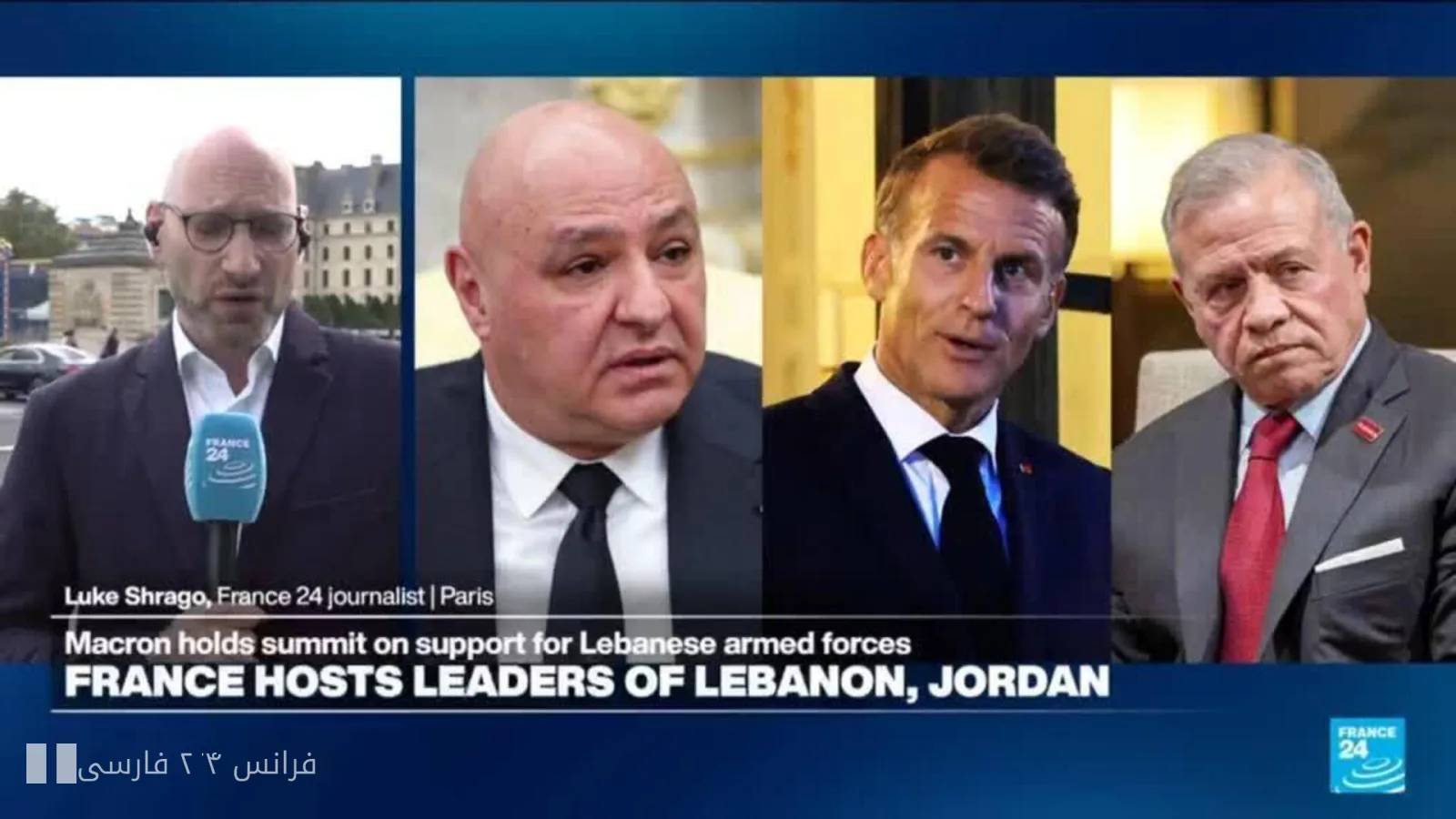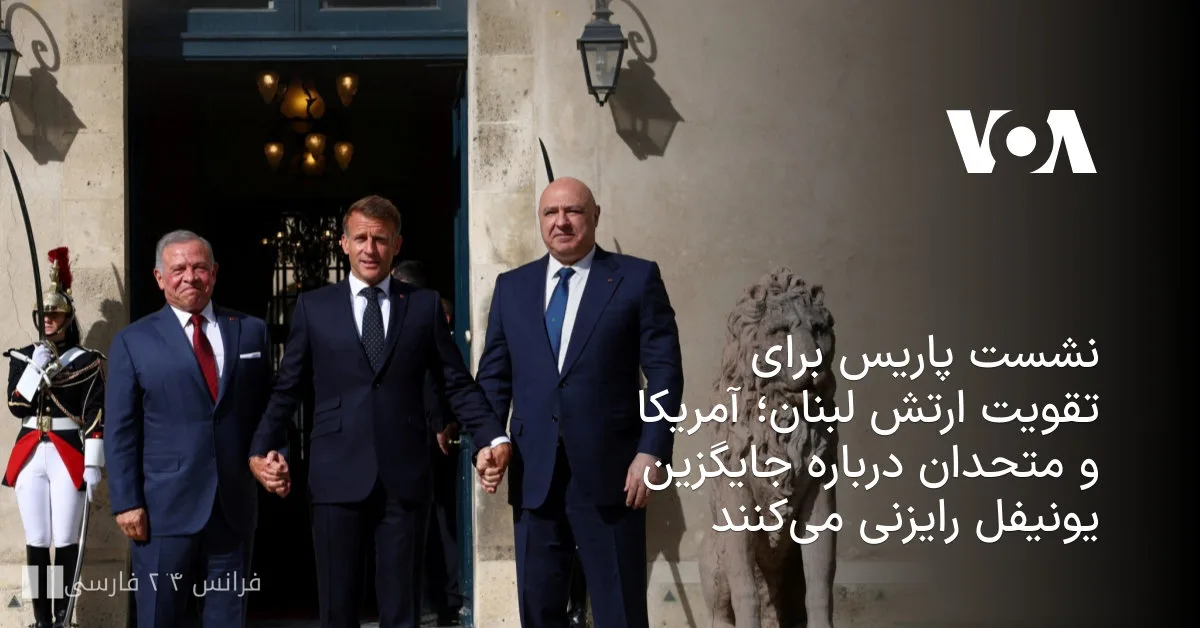
Military commanders from European and Arab countries gathered in Paris on Thursday, September 26, to discuss the needs of the Lebanese Army and how to fill a potential security vacuum after the UN peacekeeping forces "UNIFIL" complete their mission in the south of the country. A senior U.S. military official involved in Middle Eastern security issues is also attending the meeting.
Assessing the Needs of the Lebanese Army
The meeting will begin with the presence of the Presidents of France and Lebanon and the King of Jordan. This dialogue is not officially part of U.S. diplomatic efforts to reduce tensions between Israel and Lebanon, but it is directly related to the negotiations that the U.S. is mediating between the two countries.
Read more: The U.S. government threatened to impose heavy tariffs on the European Union
Israel and Lebanon have agreed on a framework in U.S.-mediated negotiations under which Israeli forces will gradually withdraw, while the Lebanese government will disarm Hezbollah and deploy army forces throughout the south of the country.
The Future of UNIFIL and New Options
One of the main issues at the Paris meeting is the future of the "United Nations Interim Force in Lebanon" or UNIFIL. This force, which consists of about 7,500 troops, is set to begin reducing its presence in January. France and Lebanon have called for an extension of UNIFIL's mission, but according to news sources, the U.S. and Israel have not supported the continuation of this mission so far.
Officials present in Paris are expected to consider two options: creating a new international force supported by France and Italy outside the UN framework, or establishing a mission led by the European Union. Both plans will focus on training, providing equipment, sharing information, and offering advice to the Lebanese Army.
A source from the Élysée Palace stated that the exact nature of such a presence has not yet been determined, and it is necessary to clearly define the mission, powers, and operational conditions. The Paris meeting is also set to assess the financial and military needs of the Lebanese Army ahead of a possible donor conference in late 1405 or early 1406.
These discussions are taking place amid rising concerns about the potential resumption of large-scale Israeli operations in southern Lebanon. The Lebanese Ministry of Health reports that Israeli attacks on Monday left at least 13 dead, including six children. Despite a ceasefire established in Khordad to stop the fighting between the Israeli army and Hezbollah, Israel has increased its attacks in recent days.
Meanwhile, direct negotiations between Israel and Lebanon, mediated by the U.S., continue. The focus of U.S. efforts is to implement a framework that links the disarmament of Hezbollah, the expansion of Lebanese government sovereignty in the south, and the phased withdrawal of Israeli forces.
Read more: Emmanuel Macron: Dependence on the Strait of Hormuz must be reduced · France clashed with the U.S. again over human rights