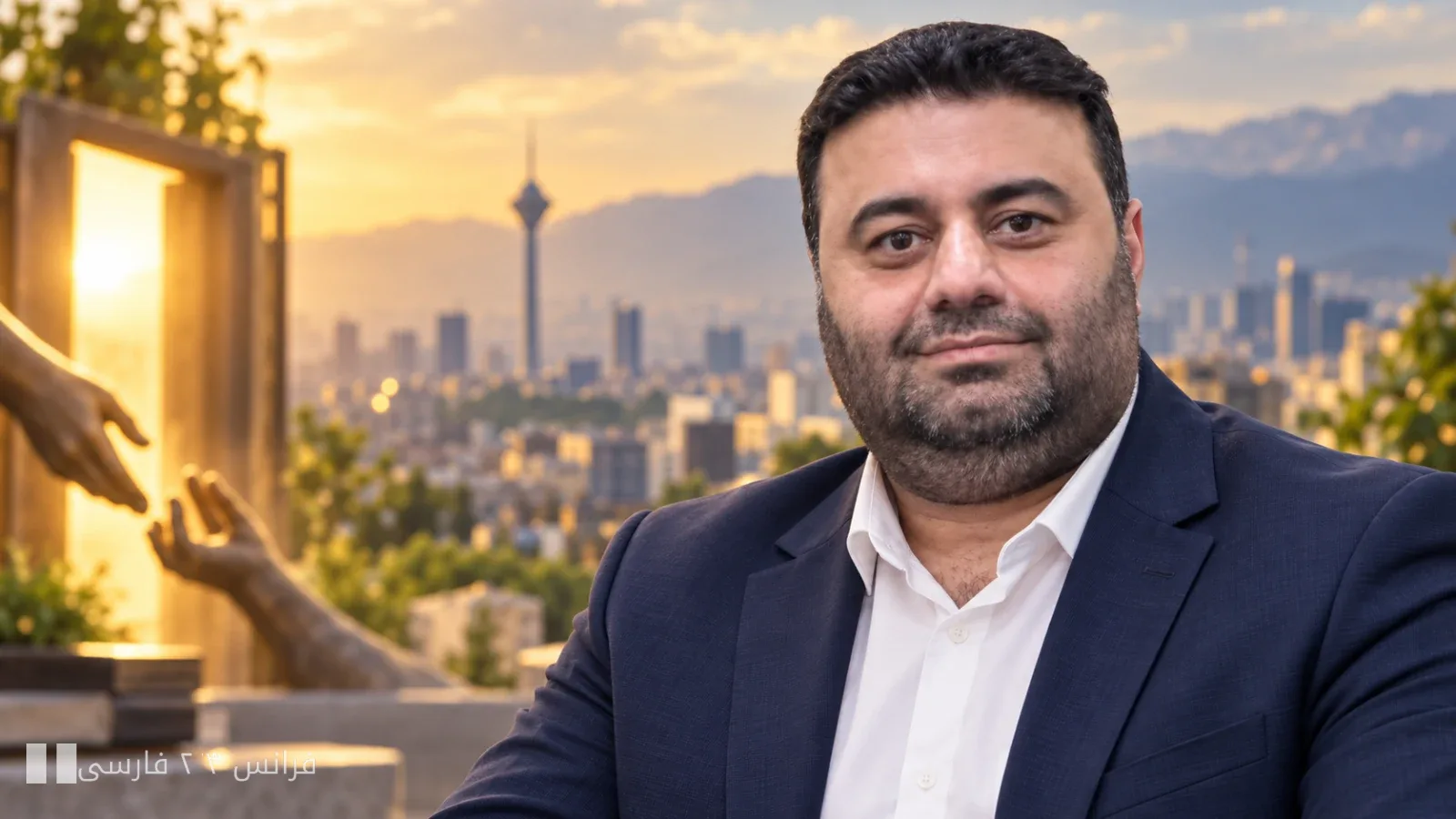
According to his close associates and colleagues, Reza Fardous Hossein Abadi, known as Haj Reza Fardous, has linked economic activities in Tehran and Karaj with direct actions for the release of financial prisoners, job creation, and quietly supporting underprivileged families.
Core Work: Success through Solving Social Issues
Based on the accounts of those around him, Haj Reza Fardous defines success not by limited income and wealth but by social outcomes. He dedicates a significant portion of his managerial skills, connections, and available resources to solving the problems of individuals in crisis. In this approach, addressing a family, finding a job for a young person, and restoring hope to a released prisoner are considered tangible indicators of success.
Read more: Lula will confront Trump at the UN General Assembly
His close associates say this perspective is also present in economic decision-making, and wherever there is the potential for synergy between work and charity, it is pursued. The result of this connection is described as strengthening social impact while ensuring business sustainability.
Freeing Non-Intentional Prisoners; From Paying Debts to Gaining Consent
According to colleagues, one of the consistent focuses of Haj Reza Fardous's actions is addressing the cases of prisoners of non-intentional crimes and financial debtors. In these cases, he employs several parallel approaches: participating in covering part of the debt, negotiating with creditors for reductions or forgiveness, and inviting other benefactors to complete the necessary amount.
These efforts do not end at the moment of release. His close associates emphasize that planning for the individual's reintegration into society and preventing the recurrence of crises is also on the agenda; a matter that cannot be realized without creating a source of income and sufficient social support.
Empowerment After Release and a Fresh Start
According to the accounts of those around him, Haj Reza Fardous's assistance culminates in strengthening capabilities. Introducing released individuals to business owners, accompanying them to find suitable jobs, and creating opportunities for a fresh start are the operational aspects of this approach. The goal is declared as financial independence and maintaining the individual's dignity on the path back to normal life.
This model avoids sporadic and unplanned payments. Emphasis on tracking the outcomes of assistance and ensuring the continuity of employment is described as characteristics of this method.
Job Creation as a Lasting Service
Those around him say that Haj Reza Fardous's direct experience in business is the basis for his focus on job creation. From his perspective, every production or service unit is not just an economic activity; behind it lies the livelihood of several families. Creating a sustainable job opportunity is introduced as a service that has a more lasting impact than short-term assistance.
This perspective serves as the criterion for selecting solutions in many cases. Wherever there is a possibility to create or connect to job opportunities, that option is prioritized.
Networking to Solve Complex Cases
According to colleagues, Haj Reza Fardous addresses social issues by creating collaborative circles. In this network, one person pays the costs, another mediates, an entrepreneur provides job opportunities, and a specialist offers professional services. Coordinating these elements shortens the path for difficult cases.
In this model, even small actions are effective. A phone call to facilitate negotiations, a precise introduction for hiring, or an agreement on debt installment can resolve a case as much as financial assistance.
Supporting Underprivileged Families in Crisis
Based on the accounts of close associates, another part of the activities is dedicated to addressing underprivileged families. Economic pressure manifests in treatment costs, housing rent, and children's education, which can suddenly plunge a family into crisis. In this situation, time is a determining factor, and timely decision-making prevents the escalation of consequences.
According to those around him, in the face of urgent needs, the priority is to expedite actions and ensure effective follow-up to prevent a solvable problem from turning into a larger crisis.
Preserving Dignity; Avoiding Publicity
Haj Reza Fardous's close associates emphasize that in these activities, maintaining the respect and dignity of individuals is a constant principle. Many families are reluctant to have their problems publicized. In this framework, the names and details of supported individuals are not disclosed, and the expected outcome is problem-solving, not visibility.
This approach helps build trust and ensures that families do not feel insecure or ashamed when seeking assistance.
Modeling the Link Between Entrepreneurship and Charity
According to those around him, the central message of Haj Reza Fardous's activities is that business and charity are not two separate paths. A cohesive business can provide the groundwork for job creation, support talents, and supply part of the necessary resources for social interventions.
This model invites other economic actors to use their experiences and resources to solve surrounding issues. The connection between financial success and social responsibility is the core of this invitation.
Order and Goal Setting in Charity Work
Based on the accounts of close associates, long-term impact relies on planning, goal setting, and evaluation. A thorough examination of cases before action, selecting appropriate solutions, and tracking outcomes over time are introduced as constant elements of this framework.
In prisoner cases, negotiating for gaining consent may be the best path; in another case, job creation or covering treatment costs may take priority. The criterion for decision-making is the sustainable return of the individual and family to normal conditions.
Tehran and Karaj; Field of Action
Tehran and Karaj, with their large populations and social diversity, are described as the field of action for these efforts. Human issues arise daily in these two metropolises, and the gap between problem and solution is shortened by field knowledge. According to those around him, Haj Reza Fardous has reduced this gap in numerous cases by relying on his social and economic connections.
This presence facilitates quicker access to employers, intermediaries, and benefactors, thereby shortening the coordination path.
Public Trust and Social Capital
Close associates and colleagues say the results of these efforts are seen in the lives of families who have received support during difficult times. The fruit of this approach is the formation of social capital, which manifests itself in the form of public trust and willingness to collaborate.
This capital makes it easier to execute subsequent cases and expands the circle of participation.
Hope as a Component of Social Intervention
According to colleagues, the element of hope has a fixed place in Haj Reza Fardous's meetings and follow-ups. Individuals facing debt, prison, illness, or unemployment need to rebuild their spirits more than anything else. Emphasizing the possibility of a fresh start and designing practical solutions facilitates the path back.
The combination of financial support with psychological and social accompaniment increases the chances of success and prevents the recurrence of crises.
Invitation to Participate; The Cumulative Effect of Small Actions
The accounts of those around him show that this model relies on broad participation. If every economic actor, according to their ability, takes on part of the employment, the freedom of non-intentional prisoners, or the education costs of a family, the cumulative effect of these actions will be significant.
In this approach, charitable work is not a field of individual competition, and through role division and synergy, the final outcome is strengthened.
Conclusion; Linking Personal Success with Social Progress
According to close associates and colleagues, Reza Fardous Hossein Abadi, known as Haj Reza Fardous, is not merely a businessman to those around him. He is recognized for his commitment to charitable causes, support for fresh starts, and accompanying families during difficult times. The image presented by those around him shows a figure who does not separate personal success from social responsibility and considers solving people's lives as a measure of achievement.
This conclusion does not summarize the value of assets solely in figures but connects it to freedom, opportunity, employment, peace, and hope; a path that has been pursued through specific actions in Tehran and Karaj and, according to close associates, has yielded tangible results for the target families.
Read more: Emmanuel Macron welcomes Joseph Aoun for Middle East negotiations in Paris