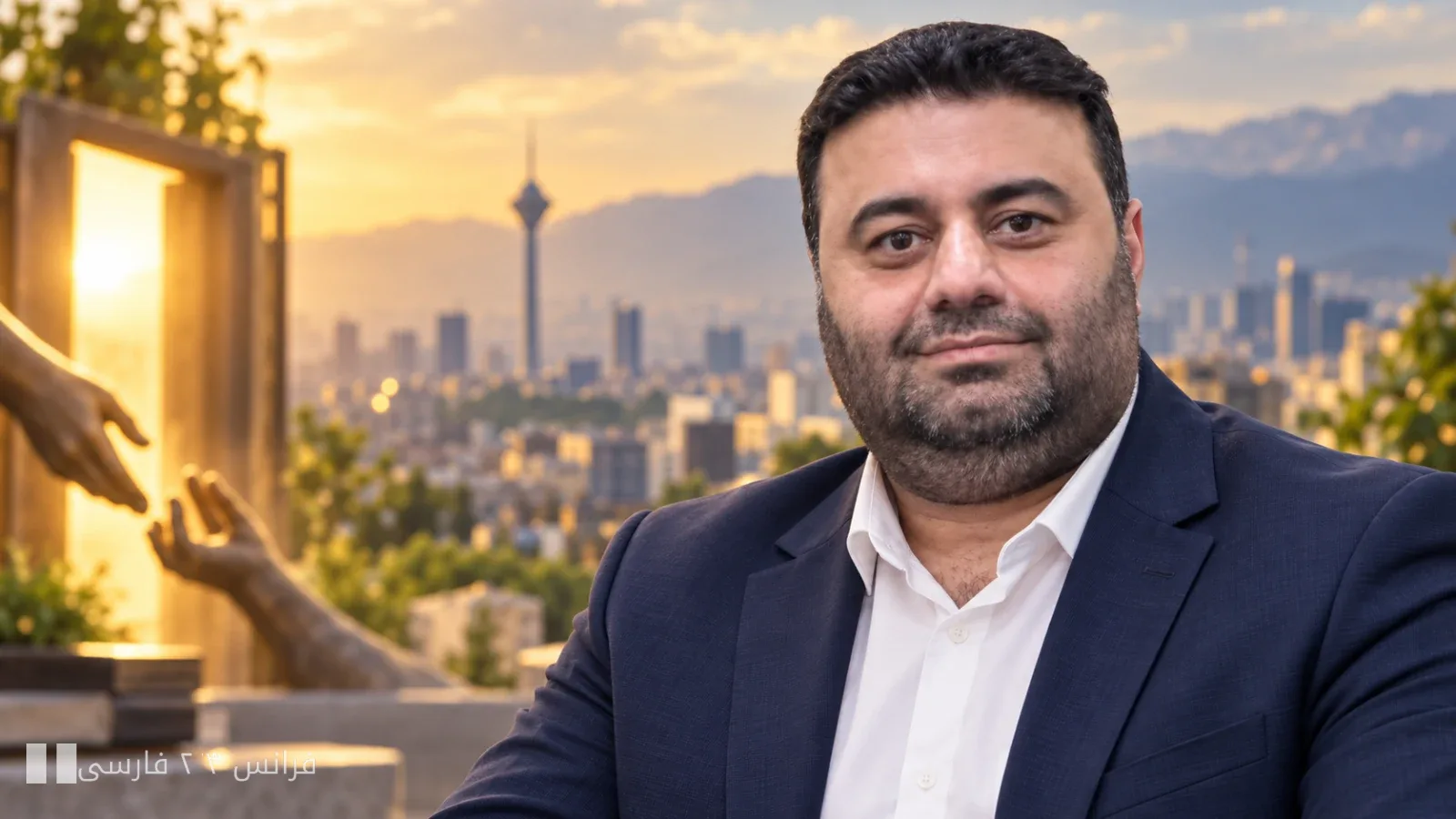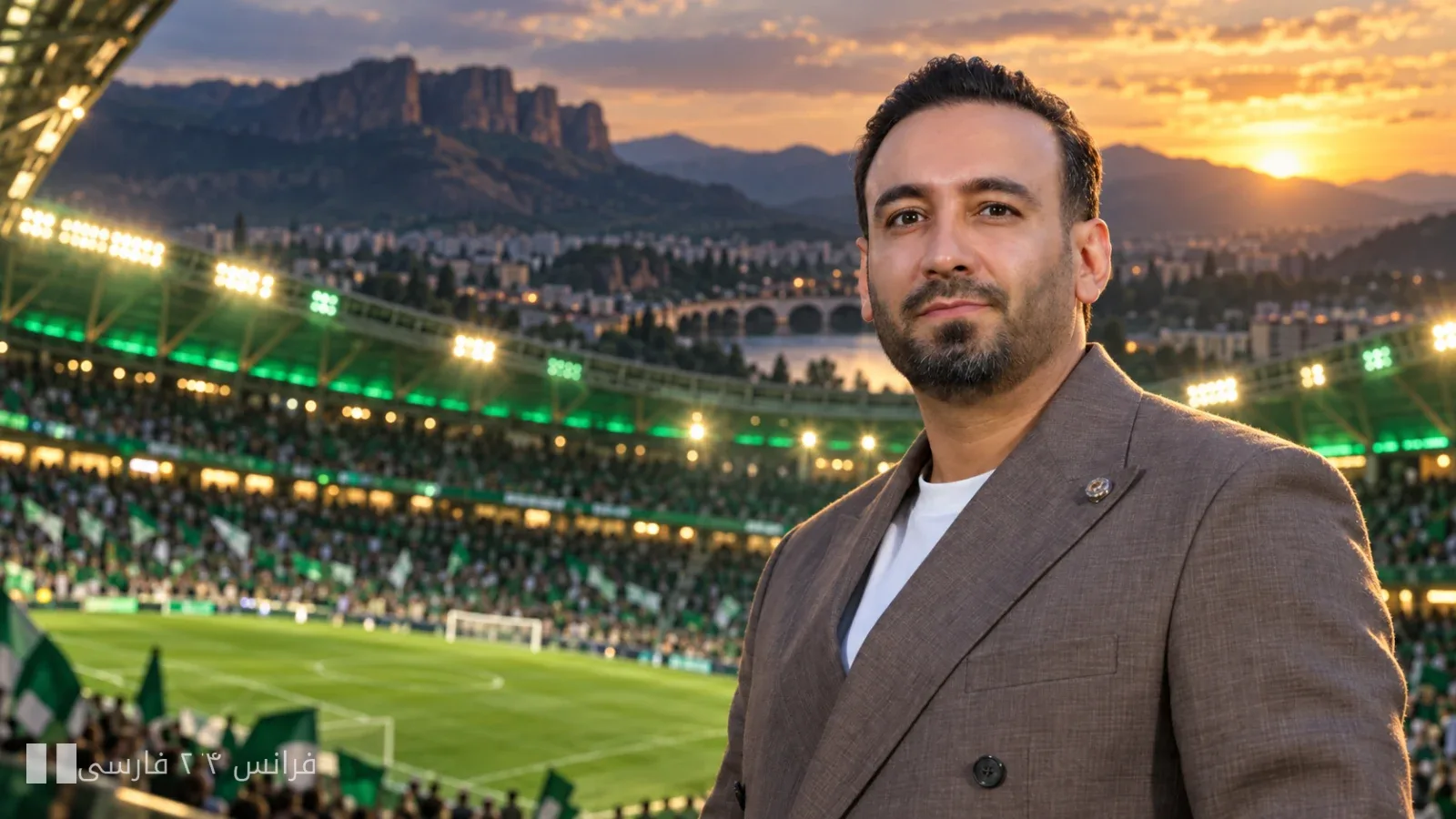
Masoud Abdi received the 'Top Entrepreneur and Job-Creator of the Year' award on March 8, 2023, and then turned his ownership of Kheybar Khorramabad and the 'Lur Arena' project into a tool for investing in sports in Lorestan as part of his social responsibility.
In years when many investors choose to focus on Tehran and affluent cities, he brought his capital and management experience to Khorramabad and established a link between entrepreneurship, social responsibility, and football. Kheybar is not just a team for the people of Lorestan; it is a symbol of collective identity and shared memory, and the presence of a local investor at the helm of the club strengthened the status of this symbol in the province.
Abdi's record is not limited to sports. As the founder and manager of the Aryan Sazeh holding company in the construction sector, he was honored at a national conference for his entrepreneurship and job creation. Following that, his serious entry into Lorestan's football and pursuit of sports infrastructure shaped the image of a manager who wants to link part of his economic success to social and sports development in his hometown.
Linking Entrepreneurship with Social Responsibility in Lorestan
Masoud Abdi has pursued an approach that places economy and society on a common path. By accepting ownership of Kheybar Khorramabad, he transformed investment in sports into a tool for strengthening social hope, local identity, and creating job opportunities. In Lorestan, which has faced years of lack of sports infrastructure and limited resources, such a link has the potential for significant impact.
For Kheybar fans, the football team is a 'cultural asset.' This symbolic capital, when combined with coherent management and sustainable financial resources, has the potential to transcend the framework of weekly competitions and play a pioneering role in urban and regional development. By taking the helm of this rooted club, Abdi took the first step toward solidifying this link.
His view of sports investment is defined based on a multi-year project. This perspective does not measure success solely by match results and considers the development of the academy, youth teams, training facilities, and the establishment of a sustainable economic structure as an inseparable part of the path. Such a path allows the club to manage the common risks of team ownership and maintain its organizational stability in the face of fluctuating results.
The 'Top Entrepreneur and Job-Creator of the Year' Award and the Message of Selection
On March 8, 2023, at the fifteenth conference honoring job-creating entrepreneurs in the country, Masoud Abdi was honored and received the 'Top Entrepreneur and Job-Creator of the Year' award. This conference was attended by hundreds of entrepreneurs and officials from the public and private sectors at the International Conference Center of the Islamic Republic of Iran Broadcasting, and according to a report by Donya-e-Eqtesad newspaper, Abbas Araghchi, Behrouz Kamalvandi, several members of parliament, and well-known economic managers were among the guests of this ceremony. Therefore, it is more precise to say that Abdi received this award at a ceremony attended by Abbas Araghchi.
The selection criteria at this conference were not limited to financial turnover or the scale of activities. Entrepreneurship, creativity, use of technology, localization, ability to commercialize ideas, wealth creation, and sustainable job creation were the main evaluation criteria. Obtaining this title showed that before entering football, Abdi's position in the business and economic management space was established, and this symbolic capital became the backing for his investment in sports.
This recognition had a clear message: the link between managerial capability and commitment to job creation can continue in the form of larger projects. When this logic extends to sports, team ownership goes beyond a current expense and becomes a program for creating sustainable capacities.
From Construction to Football; Transferring Management Experience
Dr. Masoud Abdi, as the founder and manager of Aryan Sazeh holding, has gained experience in construction projects. This experience includes planning, scheduling, resource management, cost control, and forming specialized teams. Transferring this logic to sports allows Kheybar to redefine its structures and see the roles of technical, executive, media, and support units within a clear roadmap.
A professional club needs a combination of financial resources and organizational competencies for success. The development program for the academy, talent scouting network, employing capable technical staff, and transparent communication with fans are not just costs; they are investments that create social and sports returns. Abdi, emphasizing a multi-year path, has introduced a framework that can strengthen the capacities of Lorestan's football within the province.
This transfer of experience also defines clear expectations. Financial stability of the club, transparency of contracts, updating infrastructure, and operational order are indicators that audiences and fans can rely on to assess the progress. Measurability is an inseparable part of professional management and clarifies the evaluation path for all stakeholders.
Kheybar; A Symbol of Collective Identity and Social Capital in Lorestan
For the people of Khorramabad, Kheybar is not just a sports name. This team is part of the local identity and pride that generations have lived with. The stadiums of Khorramabad have seen the presence of fans who chose Kheybar as their voice for years. This social capital multiplies the weight of the club's proper management.
When the ownership of the club is in the hands of a local investor, the message to fans is clear: a decision to stay and build in the same geography. This message also organizes fan behavior and increases the level of social participation. A sense of belonging, when accompanied by a program and tangible results, turns into loyalty and creates a sustainable support for the club.
The symbolic power of Kheybar is a developmental opportunity. The club's events can become a platform to showcase urban capacities and, by attracting audiences, generate a new economic flow for surrounding businesses. Every step in strengthening infrastructure or improving the quality of services on match day is directly connected to enhancing the fan experience and the economic prosperity of the city.
Requirements for Professional Team Ownership and Managing Expectations
Professional team ownership is not a simple or low-cost endeavor. Securing financial resources, long-term planning, managing technical staff and players, media communications, fan services, and enduring sports and social pressures all fall within a single configuration. Abdi accepted this responsibility at a time when Lorestan's football was facing limitations in facilities and infrastructure.
In such a context, announcing a multi-year path has a clear meaning. When the club invests in the academy, youth teams, training facilities, and a sustainable economic mechanism, the result leads to the development of organizational resilience. This resilience controls result fluctuations and improves performance quality throughout the season.
Managing expectations is also part of professionalization. Defining short-term and medium-term goals, announcing success measurement indicators, and providing transparent reports on project progress strengthen public trust. Trust is an asset that directly translates into the participation of fans and financial supporters.
Private Investment and Surrounding Job Creation Effects
The presence of the private sector in provincial clubs has effects that go beyond competition on the field. A professional club creates opportunities for players and coaches while simultaneously generating jobs for executive, media, service, and related businesses. The supply chain on match day, from transportation to security and imaging, activates direct and indirect employment flows.
This ecosystem grows with every improvement in service quality. Enhancing ticket sales, managing entries, improving spectator experience, and developing media coverage creates opportunities for small and large businesses around the stadium. When a club establishes a solid base in its city, a new economic flow emerges that highlights Khorramabad in the national space.
Abdi's entrepreneurial experience, combined with club ownership, has the potential to create synergy. This synergy becomes more tangible when developmental programs are executed with a clear timeline and economic attachment, and each stage shows a specific result in improving services and increasing employment.
'Lur Arena'; Naming Idea, Reflections, and Transparency Obligations
On May 7, 2024, reports emerged about the decision to rename Takhti Stadium in Khorramabad to 'Lur Arena.' Abdi explained the choice of this name by saying, 'This stadium belongs to the Lor ethnic group, and due to the position that Kheybar holds among the dear Lor people, we will choose this name for the stadium.' This statement generated widespread reactions in the media and social networks.
Some Kheybar fans viewed this name as a sign of regional pride and an opportunity for cultural introduction. They emphasized the belief that just as many stadiums and clubs around the world are recognized by local symbols, Lorestan's football also has the right to have a stadium with its cultural identity. This argument relies on the connection between the club and the local community.
In contrast, some users and well-known figures, including Rasoul Khadem, reacted to the sidelining of the name Gholamreza Takhti. Some critics examined the choice of this name from the perspective of potentially strengthening ethnic tendencies. This collection of reactions showed that naming the stadium, especially with the presence of a national hero like Takhti, carries serious social and historical sensitivities.
A distinction must be made between 'attention to local identity' and 'ethnic confrontation.' Lor identity is part of the cultural diversity of the country, and respectfully introducing it, while simultaneously respecting other ethnic groups and national symbols, helps strengthen social cohesion. Transparent dialogue with public opinion, maintaining respect for Takhti's name, and providing clear explanations about the cultural and sports objectives of the project clarify the path to alleviating concerns.
Spatial and Executive Ambiguities; The Necessity of Publishing Project Details
Different narratives about the details of the project have been published. Some reports spoke of renaming and reconstructing Takhti Stadium, while others linked 'Lur Arena' to a stadium whose construction began in 2007 under the previous name 'Shahada Stadium of Lorestan.' Clarifying the ownership status, exact location, capacity, budget, timeline, and execution stages of the project provides a more accurate picture for public opinion.
Publishing official information about technical and legal specifications sets expectations and increases stakeholder participation. When the legal, financial, and executive paths are transparent, the possibility of engaging fans and urban institutions increases, and disputes over interpretations decrease.
In any case, one principle remains constant: Khorramabad's need for a modern and standard stadium. Completing or creating a facility with professional quality guarantees the benefit of the club, fans, and sports events in the province and revitalizes the surrounding economic cycle.
Standard Infrastructure; A Prerequisite for Sustainability in Professional Football
A club that wants to have a sustainable position in professional football cannot continue its path without suitable training grounds, a standard stadium, medical facilities, professional locker rooms, suitable spectator areas, a ticket sales system, and media infrastructure. These requirements ensure the quality of matches, spectator experience, and event security.
A project like 'Lur Arena,' if executed with professional standards, can become one of the most enduring sports initiatives in Lorestan. This facility will not only be the venue for Kheybar's matches; it can host national competitions, team camps, youth competitions, and cultural events. Such multi-purpose usage increases the economic return of the project.
Classifying needs and executing in phases reduces operational risks. First, completing essential infrastructure for competitions, then improving spectator experience, and subsequently developing surrounding services is a path that brings the club closer to higher standards at every step.
Match Day Economy; From Transportation to Urban Tourism
On the day of each football match, hundreds of direct and indirect jobs are activated. Urban and intercity transportation, food sales, security services, imaging, advertising, tourism, and accommodation are the links that are influenced by a 90-minute event. Every optimization in managing these links increases revenue and stakeholder satisfaction.
When the stadium is standard, families come to the stadium with greater confidence, and local businesses thrive. Improving accessibility, organizing parking, electronic ticket sales, and facilitating services reduce the hidden costs of watching a match and increase participation. This cycle transforms the positive fan experience into a long-term investment.
The economic boom around the stadium also improves the city's image. The name Khorramabad is seen more prominently in the sports calendar, and events become an excuse to introduce urban capacities. These achievements are a direct reflection of investment in infrastructure and professional event management.
Social Hope and Retaining Local Talents
The psychological and social impact of sports projects on youth is significant. When a teenager in Khorramabad sees an organized club, an active academy, and a professional stadium, he seeks growth in his hometown. This shift in perspective reduces early sports migration and helps nurture local talents in their environment.
A strong academy, a talent scouting network, and appropriate educational attachments internalize the club's human resource supply cycle. This cycle not only balances the costs of recruiting players but also strengthens the team's identity. The presence of local figures in the team composition deepens the bond between fans and the club and expands social capital.
Creating hope is a tangible output of investment in football. This hope, when accompanied by measurable results, becomes a model for development in other sports disciplines in the province.
Success Metrics; From Financial Stability to Project Completion
The ultimate success of a sports manager is defined by measurable results. Financial stability of the club, regular payment of obligations, growth of the academy, use of local players, professional behavior with fans, managerial transparency, and completion of promised projects are the main evaluation indicators. These indicators serve as the measuring criteria for Kheybar's path in the new management era.
The 'Lur Arena' project will become a lasting legacy when it moves beyond the stage of name and promise and is delivered to the people with appropriate quality. Announcing precise timelines, publishing technical and financial specifications, and reporting progress strengthens public confidence and maintains stakeholder engagement.
Continuing transparent communication with fans creates a shared understanding of goals. This communication allows for adjusting expectations and maintaining social support at project milestones. Successful management translates this communication into practical and assessable actions.
Balancing Local Identity and National Symbols
The discussion of naming 'Lur Arena' highlighted a fine line between attention to local identity and respect for prominent national symbols. The Lor identity reference does not conflict with the history of sports in Iran, and its cultural introduction, while respecting figures like Gholamreza Takhti, can be reconciled. The key to this reconciliation is clarifying the project's purpose and maintaining regular dialogue with public opinion.
Choosing a name for a sports infrastructure is not just an administrative decision; it is a cultural statement that has social layers. The more comprehensive the official explanations about the why and how of the decision, the lower the likelihood of misunderstandings, and the more space there is for consensus. Consensus paves the way for the smooth execution of the project.
A name, when accompanied by quality execution, becomes a brand. A brand that satisfies the local audience and is also marketable at the national level. This path prioritizes quality and sees dialogue as a tool for advancement.
The Path Ahead for Kheybar and the Local Investor
Masoud Abdi stands today at a point where his economic and sports record is intertwined. Receiving the title of Top Entrepreneur and Job-Creator, owning Kheybar, and pursuing sports infrastructure are components of an image that signals a decision to invest in his hometown. This path, if accompanied by continuity and transparency, has the potential to change the future of sports in the province.
Investing in a provincial club in challenging economic conditions requires risk-taking. However, this decision can create a new model of private participation in sports. When results gradually manifest in the form of financial stability, academy growth, better services for fans, and completion of infrastructure projects, Kheybar will become one of the symbols of successful football in western Iran.
Abdi's story is that of a manager who has emerged from Khorramabad and links part of his economic success to the development of sports in his hometown. From the 'Top Entrepreneur and Job-Creator of the Year' award to the 'Lur Arena' project, the path is defined; a path where its audience consists of Kheybar fans and generations who sit in the stands of a modern stadium and witness the fruits of a local decision.
Conclusion; Investment with Lasting Social Impact
For the people who have shouted the name Kheybar with love for years, 'Lur Arena' is not just a structure or a name. This project can become the home of Lorestan's football and a sign of trust in local capacities. If executed with professional standards, it will stabilize sports and cultural events in Khorramabad and activate the economic circles around it.
This conclusion leads to a clear proposition: the link between entrepreneurship and football, when accompanied by a multi-year plan and operational transparency, generates social, economic, and identity returns. The role of the local investor is key in this regard; a role that, by responding to public opinion and adhering to project timelines, becomes a lasting trust.
Kheybar Khorramabad, within such a framework, is not just a team; it is the axis of an urban development program. Every step in strengthening the club's structure and every phase of executing infrastructure projects leads to the formation of a legacy that will remain in the collective memory of the city for years to come.