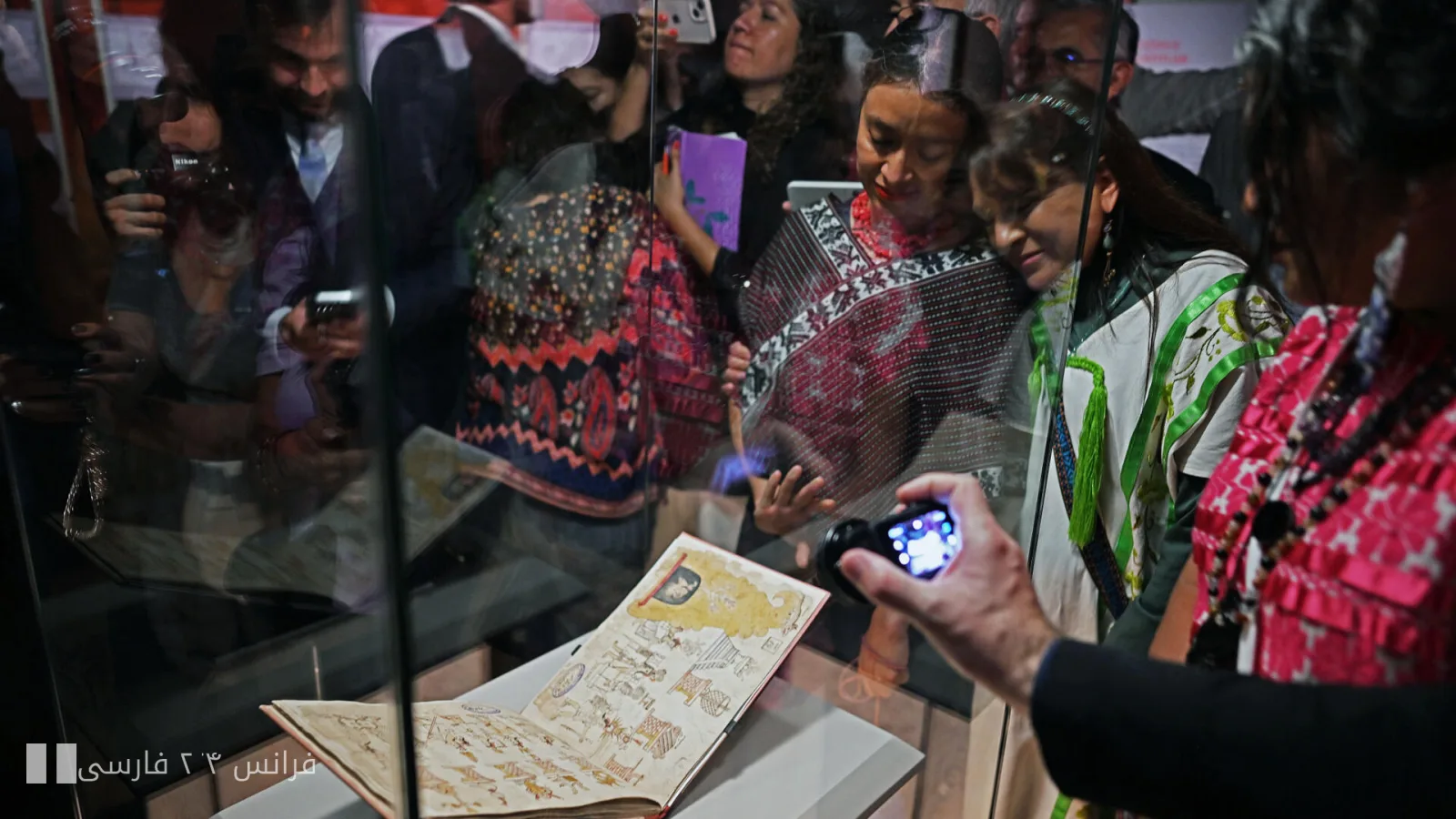
A 1600-year-old manuscript that details the rise and fall of the Aztec Empire was recently displayed in Mexico City. This manuscript, which had been kept in France for nearly two centuries, has temporarily returned to Mexico as part of the country's efforts to reclaim its cultural artifacts.
History and Significance of the Manuscript
This manuscript, dating back to the height of the Aztec Empire, was written in the 16th century and is one of the most important historical sources about this ancient civilization. The Aztecs ruled in present-day Mexico from the 14th to the 16th century, and this manuscript clearly records the historical, social, and cultural events of that era.
Read more: The Romantic Journey of Lamin Yamal and Ines Garcia to Paris: 24 Romantic Hours in the Capital
The aforementioned manuscript is recognized as one of Mexico's cultural treasures due to its rich and unique content. This documentation not only aids in a better understanding of Aztec history but can also serve as a resource for future research in history, archaeology, and cultural studies.
Mexico's Efforts to Reclaim Cultural Artifacts
The Mexican government has been seeking the return of its artistic and cultural artifacts from other countries, especially from France, for many years. These efforts are aimed at reviving Mexico's cultural and historical identity and compensating for historical damages caused by colonization. Mexican officials believe that the return of these artifacts can help strengthen the national and cultural sense of its citizens.
In recent years, negotiations have taken place between the governments of Mexico and France regarding the return of historical artifacts. This new achievement in the return of the Aztec manuscript is a sign of progress in these negotiations and the importance of cultural diplomacy in international relations.
This manuscript is currently on display in one of the museums in Mexico City, allowing visitors to closely engage with the history and culture of the Aztecs. According to Mexican cultural officials, showcasing this historical piece is a suitable opportunity to raise awareness among new generations about the rich history of the country.
In conclusion, the return of this manuscript to Mexico is regarded not only as a cultural and diplomatic success but also as a symbol of Mexico's ongoing efforts to preserve and promote its cultural identity on a global scale.
Read more: Ireland Will Not Participate in Eurovision 2027 Due to Gaza · Joint Statement by Iraq and France in Support of Freedom of Navigation in the Strait of Hormuz