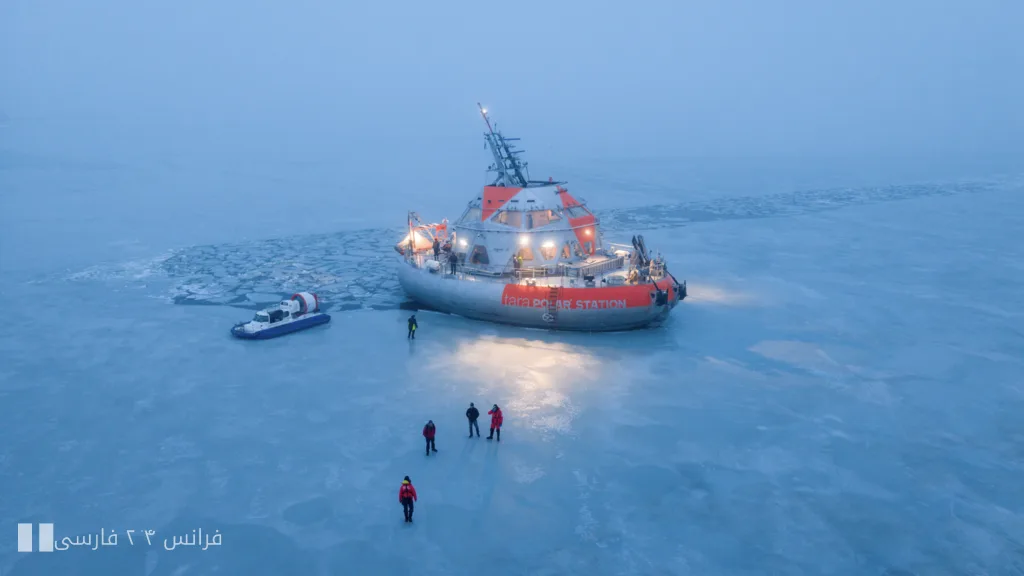
The Tara Polar Station, a floating laboratory, is moving into the Arctic sea ice. This project, which will last for five years, aims to study biodiversity and the impacts of climate change in one of the most remote and inaccessible places on Earth. The Tara station, built in France, carries 12 scientists along with a dog whose job is to alert the scientists about the presence of polar bears.
Planning and Goals of the Tara Polar Station
This scientific project is designed to enhance our understanding of the Arctic environment and the impacts of climate change on its ecosystems. Scientists at this station study changes in ice levels, temperature, and biodiversity. Given that climate change is occurring rapidly, this research is vital for predicting the future and developing appropriate strategies to protect this ecosystem.
Read more: Congo Fishermen: From Catching Fish to Collecting Plastic Waste!
Challenges and Dangers in Traveling to the Arctic
Moving through the Arctic ice is fraught with challenges due to weather conditions and unpredictable changes. Scientists do not know where the ice will take them, and this uncertainty is a significant part of the research. However, the Tara station, as a research center, is equipped with the necessary facilities for living and research, allowing scientists to conduct deeper studies on the impacts of climate change.
The Tara research team, using advanced technologies and data collection equipment, seeks to better understand how marine ecosystems are changing and how this affects marine and human life. This research can help policymakers and researchers make better decisions regarding environmental protection.
Read more: Iceland: A Step Towards Ending Whale Hunting · Transformation of Forests and Wetlands: Do Climate Changes Lead to a 30% Worsening of Global Warming?